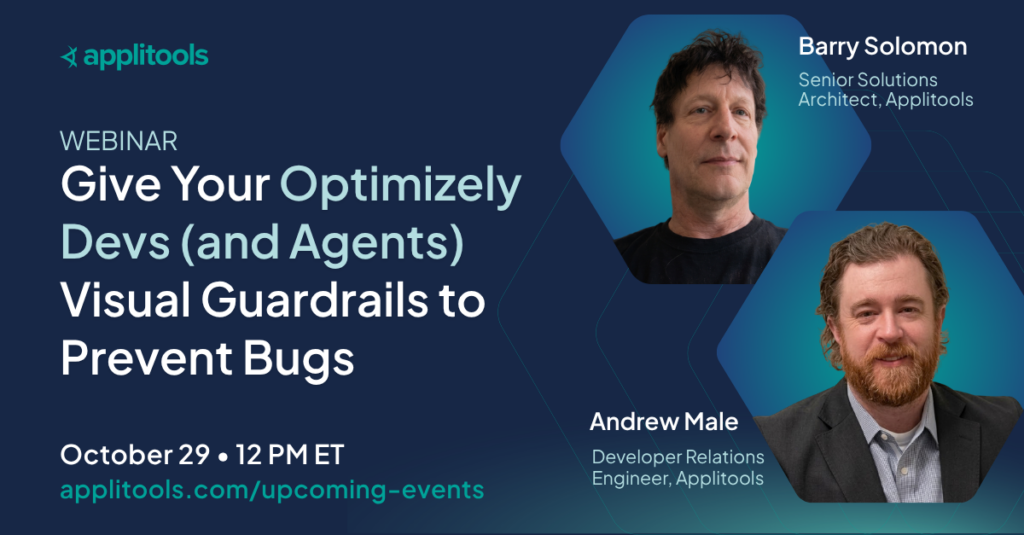
Give Your Optimizely Devs (and Agents) Visual Guardrails to Prevent Bugs. Save your spot for the Oct. 29th webinar

Give Your Optimizely Devs (and Agents) Visual Guardrails to Prevent Bugs. Save your spot for the Oct. 29th webinar
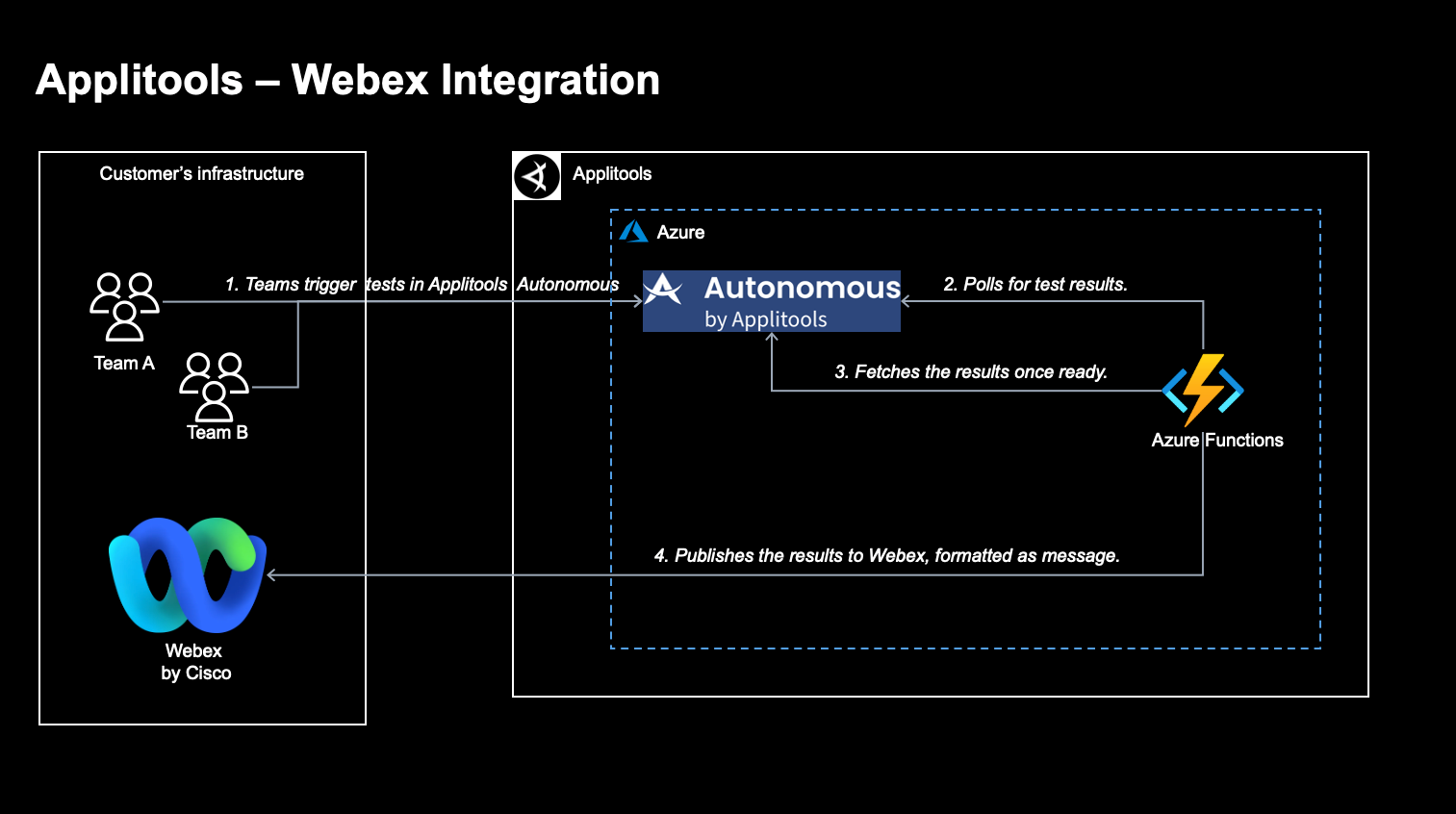
Optimizely AI agents can turn a document, image, or URL into fully populated CMS content in minutes, while AI coding agents build the components that render it. But this velocity introduces a critical blind spot: how do you verify what your AI actually publishes?
AI-built pages and AI-generated code can pass functional and end-to-end tests while the UI quietly breaks: broken layouts, mobile overlaps, or design spec violations, including on pages that reuse the components that changed. Meanwhile, E2E tests, whether written by people or AI, break whenever elements shift, forcing teams to burn sprint cycles maintaining brittle scripts rather than catching actual bugs.
Applitools delivers the deterministic Visual AI guardrails your developers and AI agents need to catch, isolate, and fix UI defects the moment code changes, long before they reach production. Ship faster, with confidence that every release delivers the exact user experience you intended.
What we’ll cover:
Optimizely AI agents can turn a document, image, or URL into fully populated CMS content in minutes, while AI coding agents build the components that render it. But this velocity introduces a critical blind spot: how do you verify what your AI actually publishes?
AI-built pages and AI-generated code can pass functional and end-to-end tests while the UI quietly breaks: broken layouts, mobile overlaps, or design spec violations, including on pages that reuse the components that changed. Meanwhile, E2E tests, whether written by people or AI, break whenever elements shift, forcing teams to burn sprint cycles maintaining brittle scripts rather than catching actual bugs.
Applitools delivers the deterministic Visual AI guardrails your developers and AI agents need to catch, isolate, and fix UI defects the moment code changes, long before they reach production. Ship faster, with confidence that every release delivers the exact user experience you intended.
What we’ll cover:
Applitools is the world’s most intelligent test automation platform. See it in action with a personalized demo.

Developer Relations Engineer, Applitools
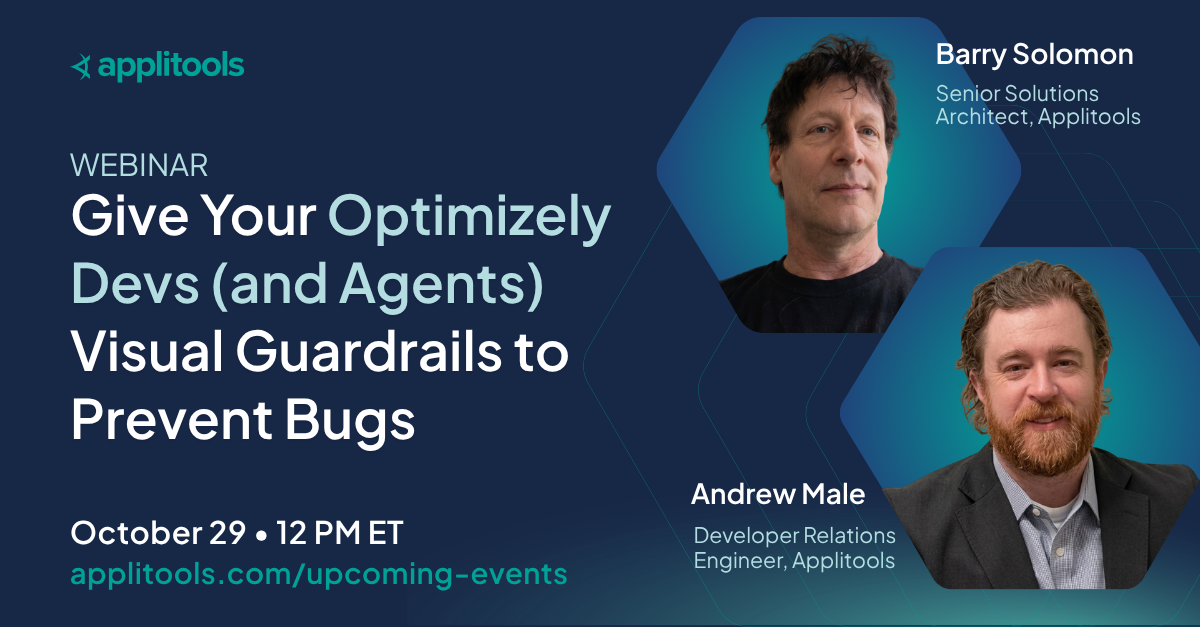
Andrew Male is a technology leader and software engineer who has spent over 20 years building software across the enterprise, startup, and video game industries. In his Developer Relations role at Applitools, he brings a practical engineering perspective shaped by prior leadership roles including CTO and Lead Software Architect, with experience in systems integration, architecture, modernization, compliance, and process optimization. He focuses on helping engineering teams solve complex technical problems with clear, real-world approaches.

Senior Solutions Architect, Applitools
Barry Solomon is a Senior Solutions Architect at Applitools, where he helps engineering and QA teams improve automated testing and visual quality. His background spans decades in software testing, cloud observability, and technical leadership, including past roles at Lumigo, Testim.io, and Mercury Interactive. He focuses on practical solutions that help teams catch bugs earlier and ship reliable software faster.
Integrating Applitools Visual AI into your Optimizely CMS development pipeline provides automated visual guardrails. Instead of relying on brittle text-based test locators or unit tests, Visual AI compares live Optimizely builds against design baselines or Figma files, giving AI coding agents instant visual feedback to catch layout bugs before merging.
Traditional E2E testing relies on strict DOM selectors and text locators that break whenever dynamic CMS block structures change. Standard automated tests evaluate code functionality but cannot detect visual defects like overlapping text, broken grids, or UI regressions across different viewports.
Developers can integrate Applitools Visual AI directly into CI/CD pipelines alongside test frameworks like Playwright or Cypress. Visual AI automatically performs pixel-accurate visual diffing between live Optimizely CMS builds and Figma design baselines, instantly identifying UI drift and layout regressions before code hits production.