
Modern ecommerce applications are more than digital storefronts. They’re immersive, complex experiences designed to captivate and engage customers—customers that spent well over $1 trillion in 2024 (over $220 billion during seasonal shopping surges).
Ecommerce applications are now multifaceted ecosystems that require high reliability, fast updates, and seamless performance across devices. With features like multi-step checkout, dynamic promotions, and personalized recommendations, these applications present a unique challenge for testing teams: ensuring consistent quality in an environment of constant change.
From adaptive content testing to streamlined cross-platform validations, AI-powered testing helps software test and development teams deliver personalized, high-quality experiences to their shoppers.
To understand how AI-powered testing can enhance quality, we first need to think about the primary complexities in ecommerce applications:
These challenges make e-commerce application testing labor-intensive, especially for teams relying on traditional methods–manual or automated.
Let’s explore how AI-powered testing can help address the common pain points of ecommerce application testing:
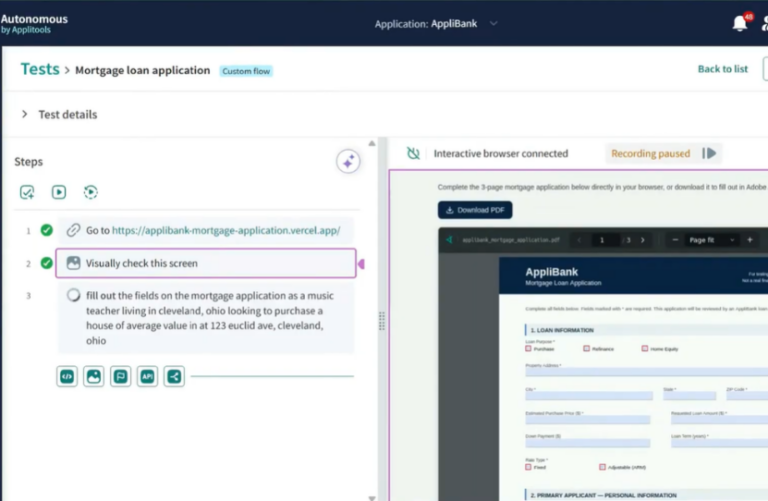
Autonomous testing provides broad page coverage by automatically creating visual tests for each page from a single URL. For more complex, critical user journeys, custom flow tests blend human oversight with AI assistance to ensure thorough validation.
AI tools, like Applitools Autonomous, can learn the structure of complex user journeys—like multi-step checkouts or specific promo code applications—and adapt to new scenarios with minimal manual intervention. For developers, this means reduced time writing scripts and a faster feedback loop, as the AI detects critical paths and validates user interactions autonomously.
Test Tip: Use autonomous testing to cover frequently changing paths like checkout, where many variations (promo codes, payment methods) need to be validated with each update.
AI-powered visual testing focuses on meaningful changes, helping to identify only the differences that impact user experience. Traditional test automation often flags minor layout shifts that don’t affect usability, leading to unnecessary noise. On the other hand, Visual AI detects layout issues that matter, minimizing false positives and simplifying testing for high-variance content.
Use Cases: Visual AI is particularly effective in handling promotional banners, personalized ads, and product recommendations. It ensures that these elements render correctly without producing redundant alerts.
Ensuring consistency across devices and browsers is crucial in ecommerce. Testing with a tool, teams can validate both functionality and appearance across multiple environments in parallel, enabling broader test coverage with significantly reduced runtime.
Tool Tip: For each release, use the Ultrafast Grid to run tests across all targeted browsers and devices simultaneously. By testing in parallel, you can catch visual and functional discrepancies early, ensuring consistent experiences across your audience’s preferred devices.
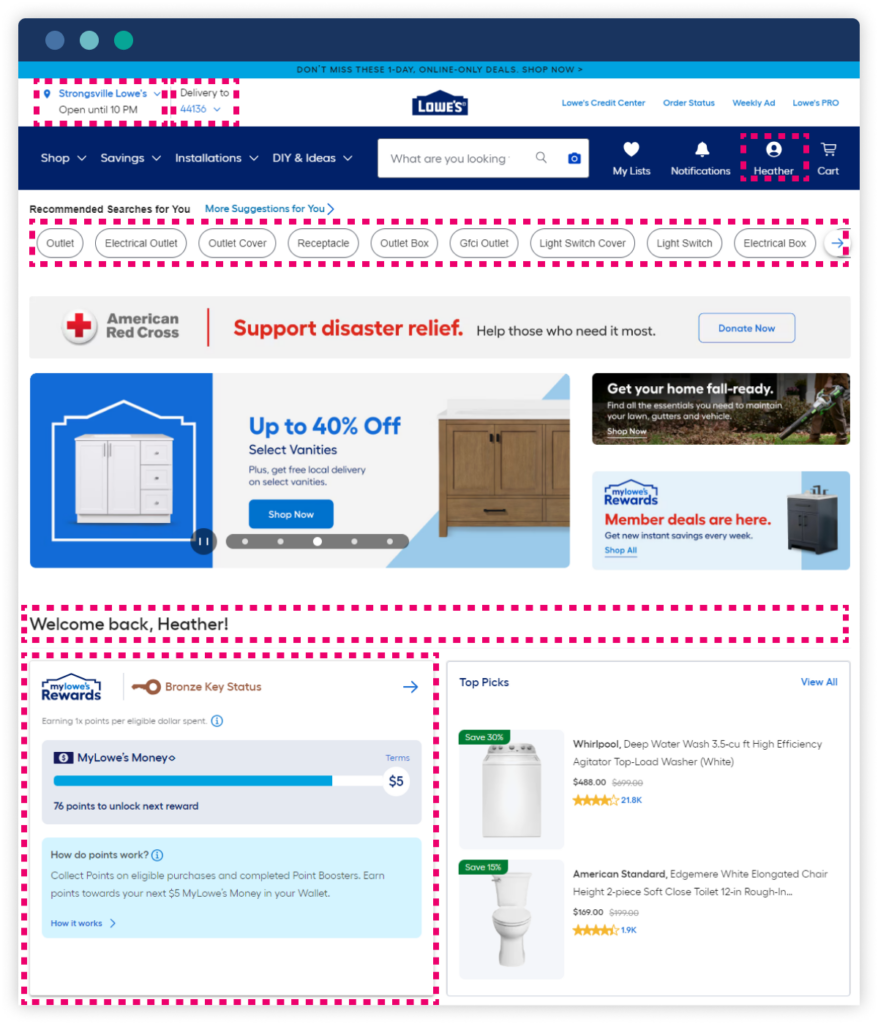
AI-powered testing can adapt to personalized and localized content variations. This allows you to verify account-based and user-specific scenarios, like tailored recommendations, language translation, and geolocation-based offers. The AI dynamically generates test scenarios for real-world edge cases, validating content presentation, accuracy, and functionality across users.
AI testing tools can run tests alongside A/B experiments to quickly validate different scenarios and identify potential issues without extensive setup or downtime. Integrated into CI/CD pipelines, AI can seamlessly support experimentation, allowing you to test new features or changes with agility.
Test Tip: Use AI for A/B testing by validating that both variations display correctly and function as expected. This can streamline experiment verification and minimize risk.
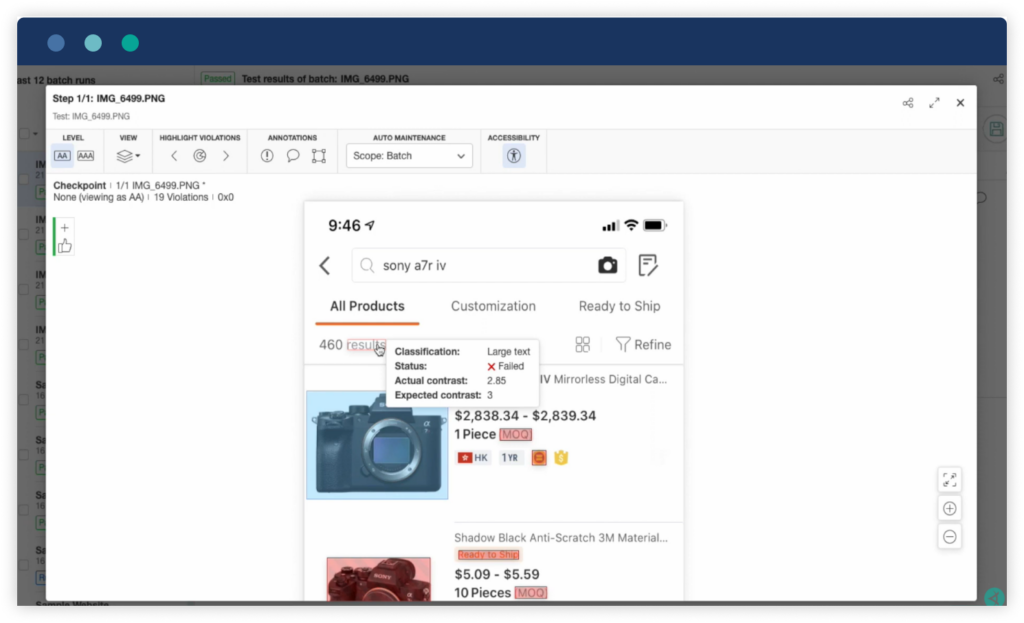
Accessibility is key to ensuring inclusivity for all of your shoppers when you consider that 4.4% of the world’s population is colorblind. Even more shoppers have contrast sensitivity issues (we don’t know about you but some of us are just getting old). AI-driven testing identifies accessibility issues early, such as missing alt text, improper color contrast, and navigation difficulties. With accessibility testing integrated into automated pipelines, developers can confidently meet compliance requirements while optimizing the experience for users with disabilities.
Ensuring that every scenario receives accurate validation across all paths and user types can be hard but your team can quickly improve test coverage by integrating AI into the below scenarios:
To maximize the benefits of AI in ecommerce application testing, you can follow these best practices:
As AI becomes an integral part of the testing process you can shift your focus toward building new features and enhancing shopper experiences by maintaining a high standard of quality:
AI-powered testing is now an essential strategy for ecommerce test and dev teams to meet user expectations and stay competitive. You can try out these strategic steps with a free trial of Applitools Autonomous.
AI-powered testing uses artificial intelligence to automate and streamline the testing process for ecommerce applications. It helps by reducing manual work, increasing test coverage, and enabling faster releases, ensuring a high-quality user experience across complex, dynamic platforms.
AI testing tools, like Visual AI, detect meaningful changes in content rather than minor layout shifts. This approach reduces false positives and focuses on changes that impact user experience, making it ideal for handling elements like promotional banners and personalized recommendations.
Ecommerce customers use a range of devices, so cross-platform testing ensures a consistent experience across mobile, desktop, and tablets. AI testing enables parallel testing across these environments, catching visual and functional issues early in the development cycle.
AI-powered tools validate various scenarios within checkout flows, such as payment options and promo codes. By automating these tests, teams can quickly ensure that all variations work seamlessly, reducing the risk of issues that could lead to cart abandonment.
AI adapts to personalized user experiences by validating content specific to each user, such as recommendations or location-based offers. This ensures that tailored elements render correctly and are consistent across different users and sessions.
Accessibility is essential for inclusivity, ensuring that all users, including those with disabilities, can interact with the site. AI testing tools identify issues like low contrast, missing alt text, and navigation problems early, helping teams meet compliance standards and enhance the experience for all users.