
By Kunal Rao, Chief Customer Officer, Applitools
Customer Success holds a distinct position in any software company. We hear from customers every day through support cases, check-ins, and Executive Business Reviews, and we work closely with the R&D and Product teams who build the platform. How we handle what we hear shapes both the customer experience and how engineering time is spent.
That responsibility has grown as the pace of software delivery has increased. Testing teams are adopting new frameworks, expanding coverage, and building quality checks deeper into their pipelines. Each of these shifts brings new questions, and how quickly those questions are answered has a direct effect on how quickly teams can move. At the same time, our R&D team is working to keep the platform ahead of these changes. Customer Success has an important part to play on both fronts.
At Applitools, Customer Success puts that position to work in two concrete ways. The first is resolving more support issues within our own team so R&D can stay focused on building. The second is bringing Product directly into our Executive Business Reviews (EBR). Both save valuable engineering time, and both are designed with one question in mind: What does this deliver for our customers?
Every support issue that reaches R&D draws on engineering hours that would otherwise go toward new capabilities. Over a quarter, those hours add up, and the context switching that comes with each escalation carries its own cost.
To address this, Customer Success established a structured time-boxing protocol in partnership with R&D. When an issue arises, our team commits to a defined window of focused investigation before anything is escalated. During that window, our Technical Account Managers and Support engineers reproduce the behavior, review logs and configuration, check known issues, and draw on the experience across the team. When escalation is needed, R&D receives a clear, well-scoped summary with full customer context.
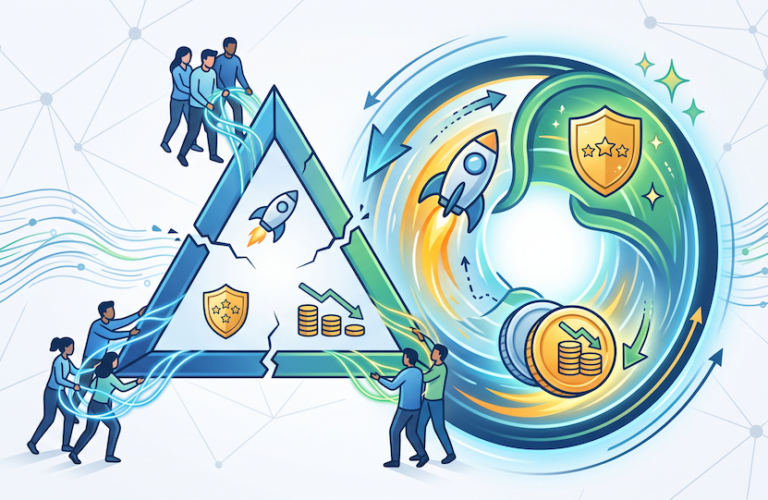
Resolving issues before they reach engineering isn’t just about faster tickets—it’s about eliminating waste to protect roadmap velocity. For a deeper look at how upstream resolution protects R&D capacity, read Breaking the Iron Triangle.
The early results are encouraging. More issues are being resolved within Customer Success, our knowledge base grows with each case, and the escalations that reach engineering are sharper and easier to act on.
The challenge has also changed how our team learns. Each case resolved within Customer Success becomes documented knowledge the whole team can draw on. Patterns that appear across accounts are shared quickly, so a solution found for one customer is available to every member of your account team the next time a similar question comes up. Over time, this builds a team with deeper and broader product expertise, and that expertise shows up in every customer conversation.
Faster answers. The people who know your account, your environment, and your testing approach are the ones working on your issue from the start. Many questions about baselines, configuration, and integrations are now resolved within Customer Success, without the wait that comes with an engineering queue.
Clearer communication. Your Customer Success team owns the issue from start to finish. When something does need R&D, we stay with it, keep you informed, and make sure engineering has everything it needs to resolve it quickly.
A faster roadmap. Every hour R&D saves on support goes back into building. That means new capabilities, stronger releases, and improvements you have asked for reach you sooner.
Proactive guidance. The patterns we see across support cases help us anticipate where teams may run into friction. Your TAM can share best practices and configuration recommendations ahead of time, helping your team avoid common issues and get more value from the platform.
Customer Success leads the Executive Business Review, our strategic forum for reviewing outcomes, aligning priorities, and planning for the year ahead. More than a status check, it is where some of our most valuable product insights surface: the workflows that are working well, the gaps teams are working around, and the capabilities that would make the biggest difference to your quality strategy.
We now invite our Product team to join these reviews. Customer Success prepares the agenda and account context, and the Product hears feedback firsthand. After each EBR, we capture the requests and observations that came up, tie them to the account, and route them into our product feedback process, where Product weighs them alongside usage data and broader market direction.
Bringing Product into Executive Business Reviews turns live customer feedback into direct roadmap influence. To see how we route EBR insights directly into product strategy, explore our framework for Data-Driven Customer Success.
Having Product in the room changes the quality of the conversation. Customers can walk through how they use Applitools in their own words, explain the outcomes they are working toward, and discuss where the platform could support them further. Product can ask follow-up questions in the moment, explore the reasoning behind a request, and share context on direction where appropriate. Both sides leave with a fuller understanding of what matters most.
This also saves engineering time. When Product hears customer needs directly and in full context, R&D builds against well-understood requirements, with fewer rounds of clarification and rework along the way.
A direct line to the roadmap. Your feedback reaches the people shaping the product in the same conversation where you share it, with the full context of your goals and testing program.
Earlier context on direction. Conversations with Product give your leadership a better view of where the platform is heading and a chance to share input while ideas are still taking shape.
More influence on what gets built. Feedback from EBRs carries real weight in roadmap decisions because it comes with clear business outcomes and priorities attached.
A closed loop. Customer Success follows up on what was heard and shares progress as it develops, so you can see how your input is shaping the platform.
Both efforts reflect how we see the role of Customer Success at Applitools: the connection point between our customers and the teams who build the product. We resolve what we can quickly, escalate with clarity when needed, and carry your voice directly to Product.
We will continue to build on both efforts in the months ahead. Our team will keep refining the Time Box Challenge as we learn from each case, expanding the knowledge we draw on, and bringing Product into more customer conversations. We will also keep measuring how these changes show up for customers, from time to resolution to the feedback that makes its way into the product.
The result is a partnership that benefits everyone involved. R&D spends its time building, and our customers get faster support today and a product shaped by their priorities over the long term.
Kunal
Have a question or product idea to share? Reach out to your CSM or TAM directly, or contact our Support team. Every conversation helps us serve you better and shapes what we build next.

Chief Customer Officer, Applitools
Kunal Rao is a seasoned customer success and go-to-market executive with more than 20 years of global experience building, scaling, and transforming post-sales organizations at technology companies. Read more.