Give Your Optimizely Devs (and Agents) Visual Guardrails to Prevent Bugs. Save your spot for the Oct. 29th webinar

Give Your Optimizely Devs (and Agents) Visual Guardrails to Prevent Bugs. Save your spot for the Oct. 29th webinar
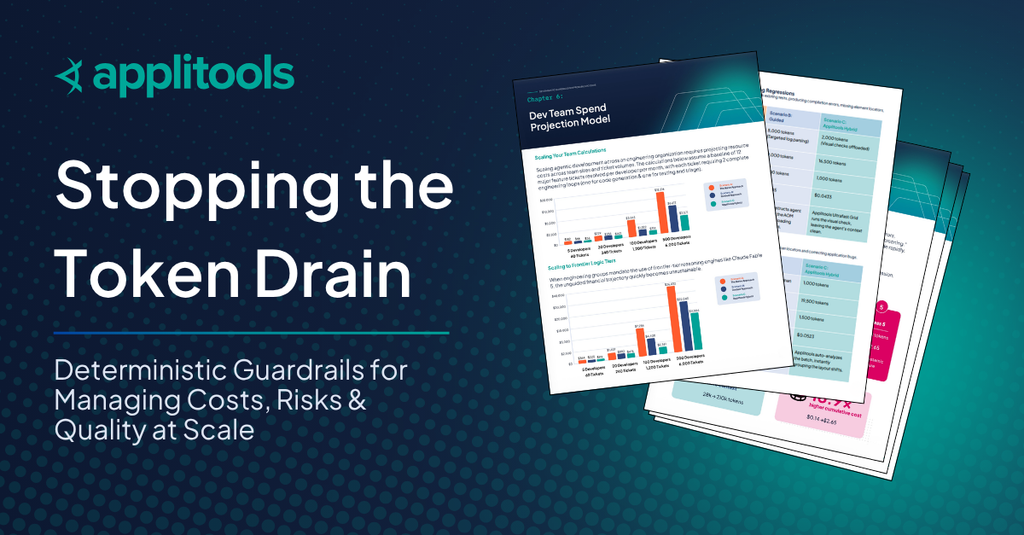
Autonomous AI agents are changing how software is built—reading, writing, and executing code directly in the workspace. But because AI-created code is probabilistic, unguided agents frequently waste tokens in infinite loops or take destructive shortcuts (like deleting failing tests) just to force a green build.
Download this whitepaper to discover:
The monkey-paw risk occurs when an unguided AI agent solves a coding problem by taking destructive shortcuts—such as deleting failing unit tests, bypassing security controls, or silencing assertions—to force a successful build without actually fixing the underlying software defect.
Deterministic guardrails enforce structural rules, context-management limits, and human-in-the-loop plan checks before code execution. Offloading tasks like UI validation to visual AI prevents agents from re-scanning workspace context or entering infinite execution loops, cutting token spend by up to 80%.
Context poisoning happens when an AI coding agent ingests bad data, stale execution logs, or misleading comments into its active workspace window. The agent accepts this invalid information as absolute truth, compounding logic errors across subsequent reasoning cycles and writing flawed code.
Infinite token loops occur when an autonomous AI agent encounters recurring build failures or syntax errors and attempts to fix them without structural limits. The agent continually re-analyzes its entire codebase context and executes repetitive edits, consuming thousands of tokens without reaching a valid resolution.
