Why Test Maintenance Breaks at Scale
Test maintenance at scale slows releases. Teams that rely on coded assertions spend more time updating tests than improving coverage. Brittle locators, environment drift, and false positives all add up—turning automation into a maintenance cycle.
Neglecting maintenance is like skipping car care: small issues snowball into costly downtime. A smarter approach replaces manual review and locator-based scripts with automated, visual validation that adapts as your UI evolves.
How Visual AI Delivers Test Maintenance at Scale
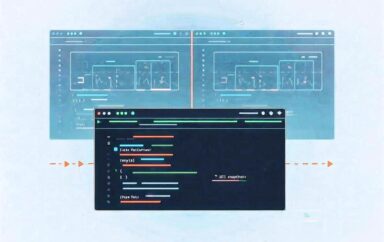
Visual AI replaces dozens of coded assertions with a single checkpoint that mimics how humans see. It validates full UI states, detecting layout shifts, missing elements, and text overlaps automatically.
By consolidating validations into one Visual AI check, teams cut review time, reduce false positives, and gain faster feedback cycles.
Scale Reviews with Ultrafast Grid and Grouping
Running tests one browser at a time no longer scales. The Applitools Ultrafast Grid executes a single test once, then validates results across every browser and device combination in parallel.
Batching and grouping features make reviews equally efficient—approve or reject similar changes across entire runs in just a few clicks.
How it works
- Replace assertions with one visual checkpoint
- Run once across all browsers and devices
- Batch results for unified review
- Approve or reject in bulk
- Tune match levels for dynamic content
Together, these capabilities eliminate redundant effort and make large-scale testing faster to maintain.
Customer Results: 78% Less Maintenance
Teams that adopt this approach see measurable ROI. At Peloton, replacing a legacy visual testing tool with Applitools Visual AI produced a 78% reduction in maintenance time and saved about 130 hours per month.
With dynamic leaderboards, live data, and responsive layouts across web and native mobile, Peloton maintains quality at scale without expanding test overhead.
Three Features That Change Maintenance
“Ultrafast Grid, Visual AI match levels, and bulk grouping—those three change the game.”
Mike Millgate, Smarter Test Maintenance at Scale
These three deliver flexible validation, fast execution, and effortless maintenance. Each removes manual steps and accelerates the feedback loop that keeps releases reliable.
Smarter Maintenance for Modern Teams
Smarter test maintenance isn’t about writing more code—it’s about automating intelligently. Visual AI reduces flakiness, speeds reviews, and scales across devices and environments.
To see what’s next, explore Applitools Eyes 10.22, featuring faster review cycles, new Storybook and Figma integrations, and even shorter feedback loops for test maintenance at scale.
Frequently Asked Questions
Visual AI uses automated visual assertions to validate full UI states, catching layout and content changes that code-heavy checks miss.
One visual checkpoint replaces dozens of brittle assertions, while batching and grouping speed reviews across browsers and devices.
Visual AI applies learned match levels and region logic to reduce false positives and handle dynamic content; classic visual diffing is more brittle. Learn more about Visual AI.
Layout, text, and color match levels tune sensitivity so teams can ignore cosmetic shifts while catching meaningful UI regressions.
Yes—Applitools has drop-in SDKs let you run your existing tests and add a single Visual AI checkpoint. Learn how to quickly integrate Applitools into your current tech stack.