New Applitools Eyes MCP server tools: give your AI agent real eyes to validate what it builds faster. Save your spot for the launch webinar Sept. 24th

New Applitools Eyes MCP server tools: give your AI agent real eyes to validate what it builds faster. Save your spot for the launch webinar Sept. 24th
AI coding agents lack deterministic visual awareness. When probabilistic models check probabilistic code, layout shifts, responsive clipping, and visual hallucinations slip into production. Applitools gives AI coding agents deterministic Visual AI eyes directly inside their chat workflow.
Stop passing raw screenshots into vision LLMs that hallucinate and guess. Applitools gives Claude Code, Cursor, Copilot, and Cline pixel-accurate diff bounding boxes, cropped images, and pruned DOM metadata so they can validate UI with zero variance.
Investigate regressions, correlate visual bugs to component source lines, and manage baselines without ever leaving your chat. Developers stay in flow while agents triage failures automatically.
When tests fail, unchecked AI agents often "fix" them by deleting assertions or loosening thresholds. Server-enforced review gates require verified visual evidence before tests or baselines can be resolved.
AI tools generate code fast, but probabilistic LLM agents lack visual perception to verify rendered layouts, creating an "AI Black Hole" where statistical guesswork leads to layout bugs and flaky pipelines.
Applitools Eyes shines a light on this gap. By combining computer vision with structural DOM analysis, you get a deterministic, zero-variance visual quality referee for your development pipeline.
In-chat root-cause localization
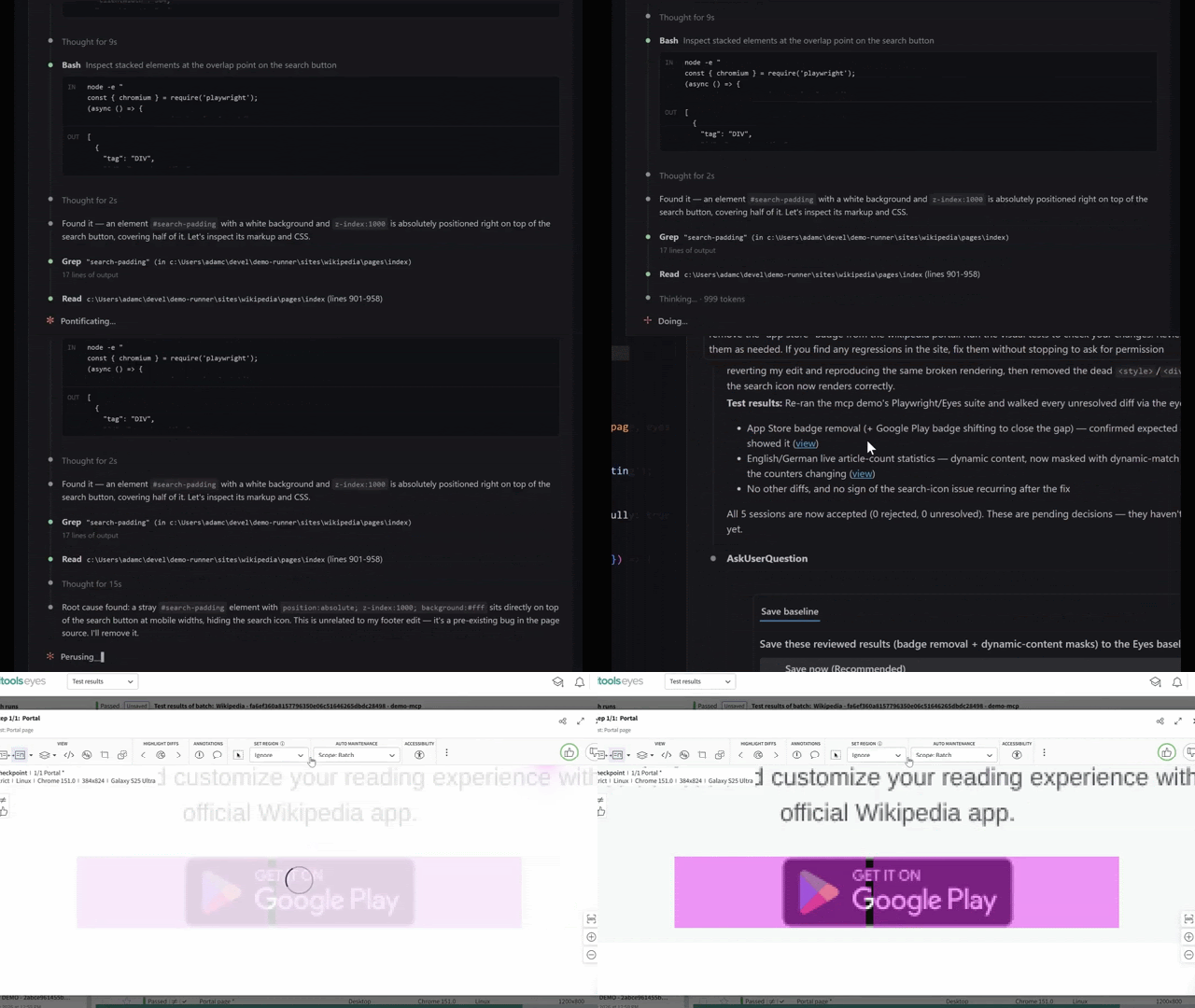
When a visual check fails, your agent doesn't guess from a stack trace or raw image. Eyes MCP tools feed the agent exact diff coordinates and pruned DOM mutations, allowing it to trace layout bugs directly to the component file and source line.
Zero dashboard round-trips
Developers don't need to halt coding, open external browser dashboards, or hunt down broken CSS. The agent investigates the batch, explains the visual diff in plain English, and applies the code fix straight from your prompt.
Deterministic division of labor
VLMs approximate visual scenes rather than calculating exact coordinates. Applitools separates reasoning from measurement: our Visual AI engine computes pixel-exact diffs off-agent, while your coding agent focuses on reasoning and code remediation.
Protect context windows and token budgets
Analyzing high-resolution desktop and mobile screenshots inside multi-turn LLM chats consumes tens of thousands of tokens. Applitools computes diffs externally and passes compact metadata, slashing token spend and eliminating context bloat.
Natural language lifecycle management
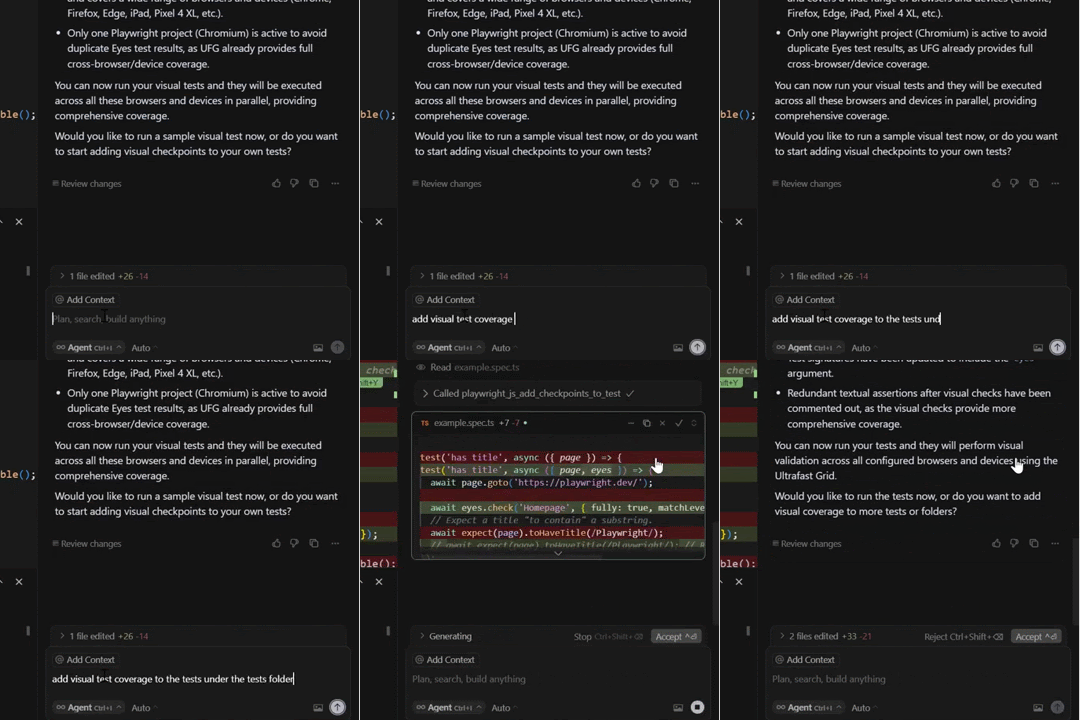
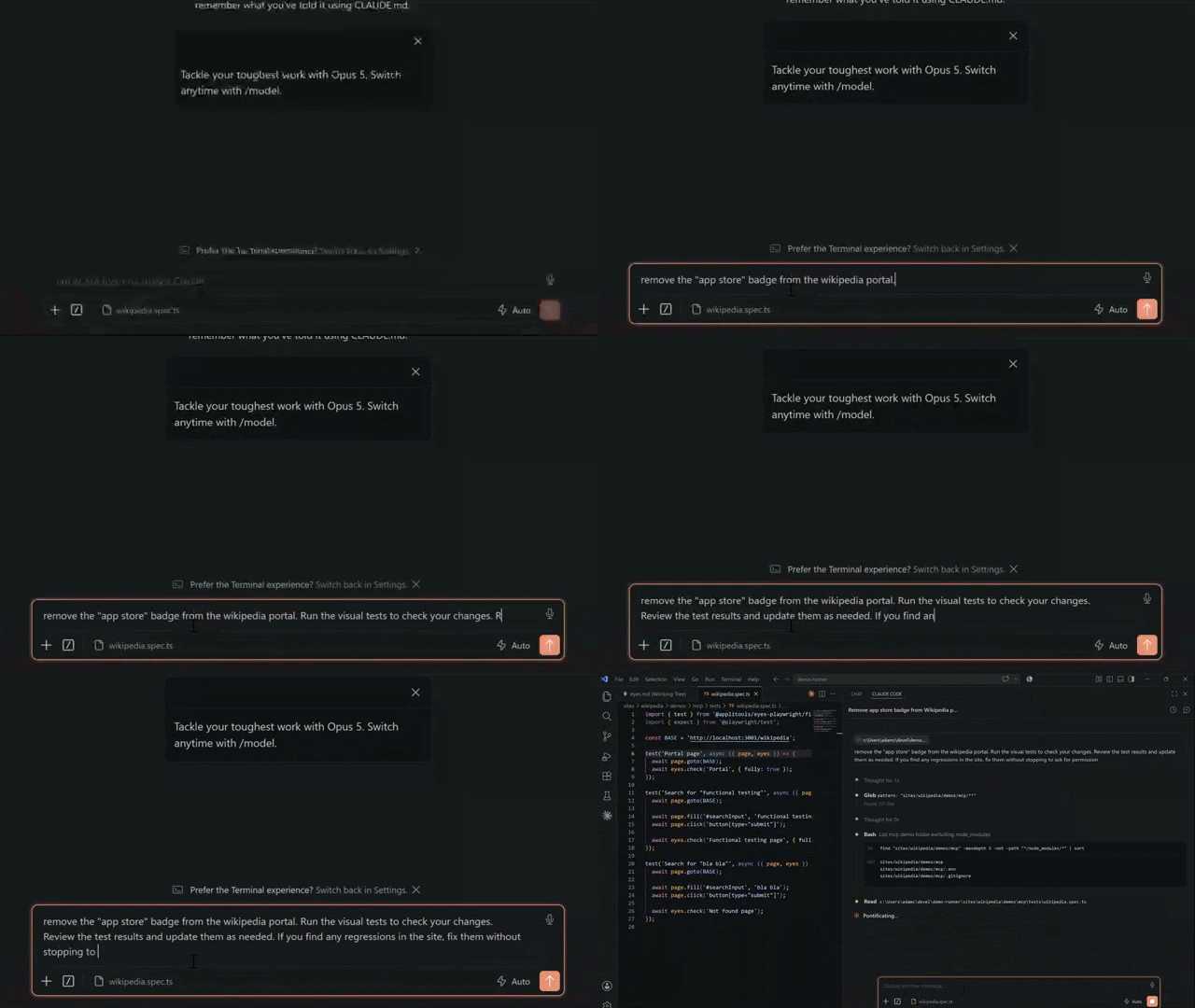
Reviewing visual changes shouldn't require manual web dashboard administration. Instruct your agent in plain English to inspect batch failures, accept intended styling updates, reject unintended drifts, or apply dynamic match regions.
Enforced human-in-the-loop review gates
Agents can never overwrite baselines silently. The eyes_resolve_save tool enforces an explicit human-in-the-loop authorization gate, ensuring your team retains complete governance over the visual source of truth.
Catch cross-browser drift early
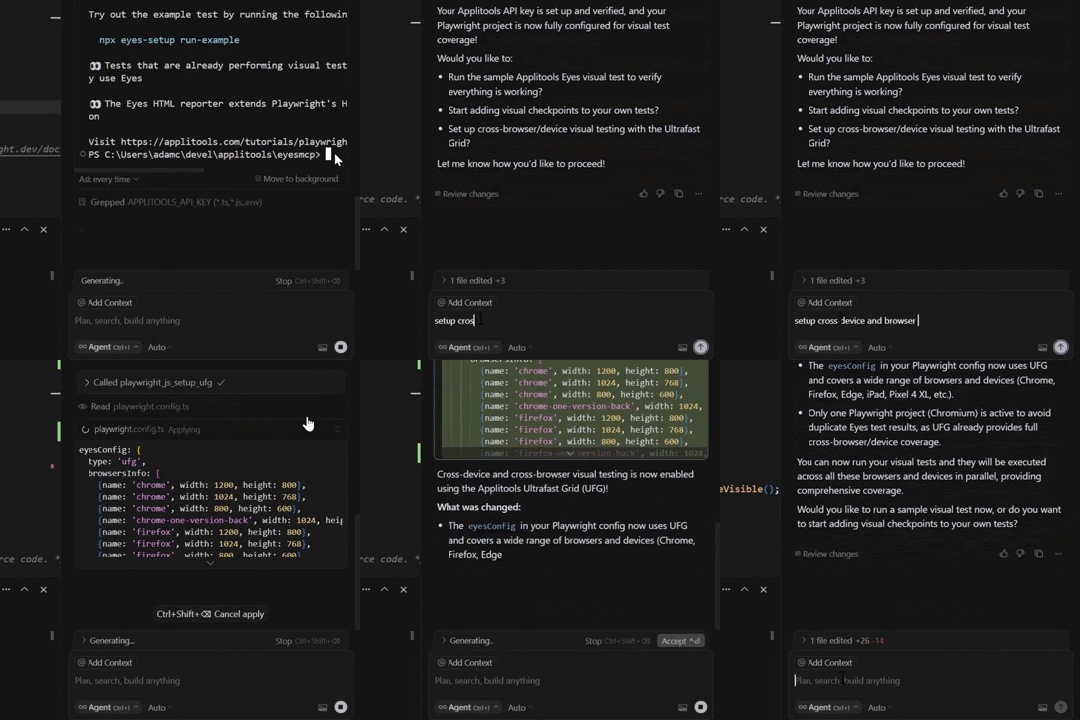
Local AI coding agents run in single headless Chromium instances, letting WebKit, Firefox, and mobile viewport regressions escape detection. Applitools surfaces parallel Ultrafast Grid execution results right back into the agent conversation.
Universal framework compatibility
Eyes MCP tools operate on test session data, making them completely framework-agnostic. Your existing test suites written in Playwright, Cypress, Selenium, WebdriverIO, Appium, or Storybook work with AI agents out of the box.
Trained on over 4 billion real application images, Applitools simulates human vision to ignore font smoothing, sub-pixel anti-aliasing, and harmless rendering noise while catching functional bugs pixel-diffing tools miss.
Instead of dumping entire HTML trees into LLM prompts, Applitools isolates the exact visual diff bounding boxes and pruned DOM subtrees, giving agents the precise context needed to write clean CSS and JSX patches.
Unlike naive tools that return binary pass/fail flags, Eyes MCP enforces a structured review sequence (eyes_review_progress → eyes_review_diff_report → eyes_review_end) ensuring agents gather verified visual proof before proposing code fixes.
Distributed via @applitools/mcp across three distinct families - 10 Inspection tools, 4 Resolution tools, and 3 Review tools on the official Model Context Protocol registry.
Visual comparisons run in dedicated Applitools cloud or secure local container environments. Page snapshots, proprietary component source code, and DOM data are never sent to external foundation models or used for LLM training.
Works natively with leading AI agent environments—including Cursor, Claude Code, GitHub Copilot, and Cline—with zero friction and setup in under two minutes via standard MCP client configuration.
